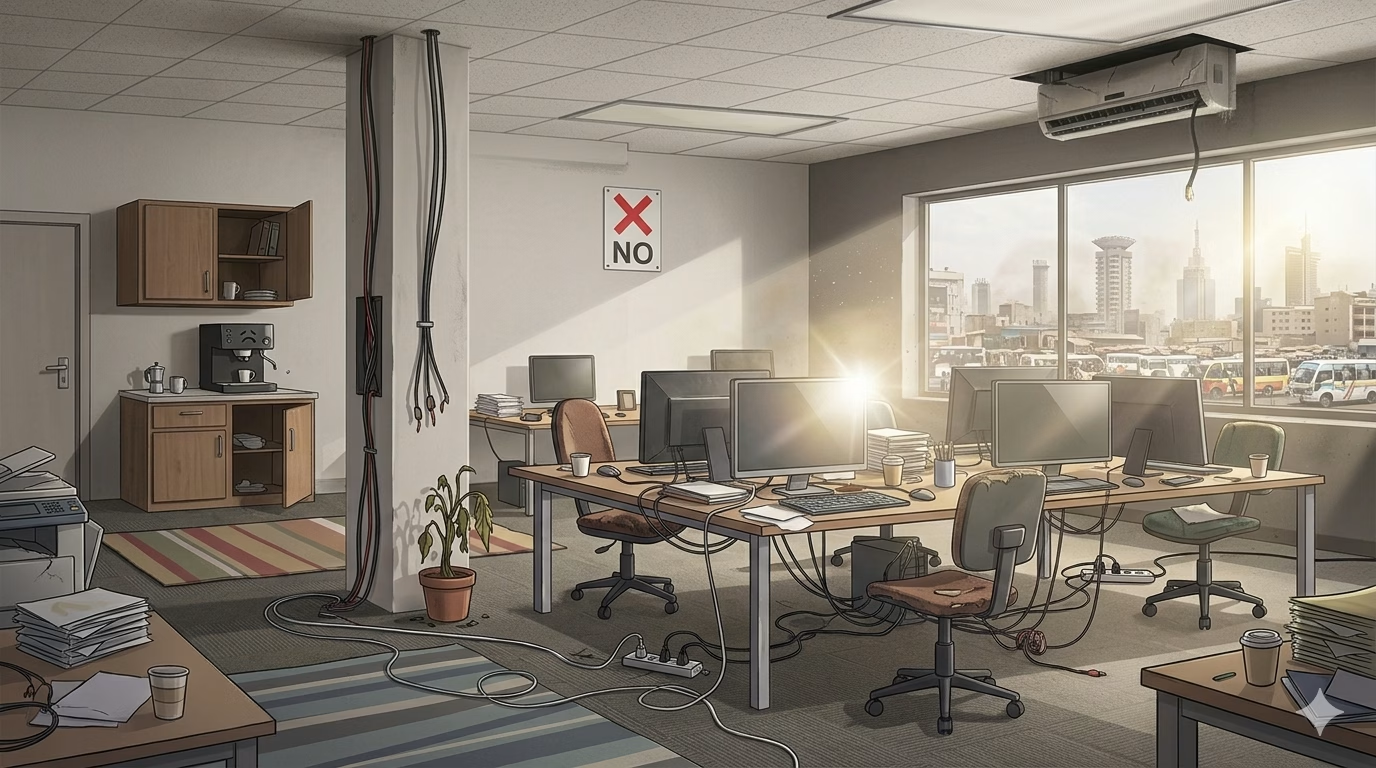
Creating a successful office environment requires more than selecting attractive furniture and colours. In Nairobi’s competitive business landscape, poor office interior mistakes can lead to reduced productivity, higher staff turnover, wasted budgets, and a workspace that fails to reflect your company’s values.
Many businesses in Westlands, Upper Hill, Kilimani, and the CBD learn costly lessons after completing workplace design Nairobi projects. Common pitfalls include ignoring functionality for aesthetics, inadequate planning, and failing to account for local realities such as climate, power reliability, and hybrid working patterns.
Saint Boss, a premium Nairobi-based firm specialising in interior design, space planning, furniture supply, fit-outs, and project management, has supported numerous corporate clients in delivering effective office interiors Kenya. Our integrated approach helps businesses avoid these mistakes and create workspaces that enhance performance and employee wellbeing.
This guide highlights the most frequent office interior mistakes to avoid in 2026 and provides practical, actionable advice for achieving professional, functional, and future-ready workplace design Nairobi.
Mistake 1: Prioritising Aesthetics Over Functionality
One of the most common office interior mistakes is focusing heavily on visual appeal while neglecting how the space will actually be used.
Symptoms of this error include:
- Beautiful but uncomfortable seating that discourages long work sessions
- Open-plan layouts with no acoustic control, leading to constant noise distractions
- Stylish desks that lack sufficient storage or cable management
How to avoid it: Start every project with a detailed needs assessment. Understand daily workflows, team collaboration patterns, and individual focus requirements. Ensure every design decision supports productivity first, with aesthetics enhancing rather than compromising functionality.
Professional space planning ensures layouts optimise flow while incorporating ergonomic furniture and practical storage solutions.
Mistake 2: Inadequate Lighting and Poor Acoustic Design
Many Nairobi offices suffer from harsh overhead lighting or insufficient natural light, causing eye strain, headaches, and reduced concentration. Similarly, open-plan designs without acoustic treatments create noisy environments that hinder focused work and virtual meetings.
How to avoid it: Implement layered lighting – ambient, task, and accent – with appropriate colour temperatures. Maximise natural daylight where possible and use dimmable, energy-efficient LED systems suitable for variable power conditions.
For acoustics, incorporate sound-absorbing materials such as fabric panels, carpets, ceiling baffles, and plants. These solutions are particularly important in office interiors Kenya where open layouts are popular but noise control is essential.
Mistake 3: Ignoring Sustainability and Local Climate Considerations
Choosing trendy but impractical materials that perform poorly in Nairobi’s dusty seasons or temperature fluctuations is a frequent and expensive mistake.
How to avoid it: Select durable, low-maintenance, and sustainable materials such as locally sourced stone, bamboo, or commercial-grade fabrics with stain resistance. Incorporate energy-efficient systems and biophilic elements that improve air quality and reduce running costs.
Sustainable workplace design Nairobi not only lowers operational expenses but also appeals to modern employees who value corporate environmental responsibility.
Mistake 4: Underestimating Storage and Cable Management
Cluttered desks, visible wires, and insufficient storage quickly make even newly fitted offices look untidy and unprofessional.
How to avoid it: Integrate hidden storage solutions, built-in cabinetry, and comprehensive cable management systems from the design stage. Modular furniture with integrated power points keeps workspaces clean and organised.
In office fitouts Nairobi, planning for technology infrastructure early prevents costly retrofitting later.
Mistake 5: Failing to Plan for Hybrid and Flexible Working
Many offices designed pre-2024 still assume everyone works from a fixed desk five days a week. This rigid approach no longer meets current needs.
How to avoid it: Incorporate flexible layouts with hot-desking options, collaboration zones, quiet focus pods, and easily reconfigurable furniture. Design for both in-person collaboration and virtual participation.
A future-proof workplace design Nairobi should adapt easily as team sizes or working patterns evolve.
Mistake 6: Choosing the Wrong Scale and Proportion
Oversized furniture in small offices or tiny pieces in large open spaces creates imbalance and wastes valuable floor area.
How to avoid it: Work with experienced designers who understand scale and proportion in relation to your specific floor plate. Use 3D renderings to visualise furniture placement and circulation paths before procurement.
This is especially critical in Nairobi’s varied commercial buildings, where floor plates and ceiling heights differ significantly.
Mistake 7: Skipping Professional Project Management
Attempting to manage contractors, suppliers, and trades independently often leads to delays, quality issues, and budget overruns.
How to avoid it: Engage a single experienced partner responsible for the entire process from concept to handover. This integrated design-and-build model reduces miscommunication and ensures accountability.
Why Saint Boss?
Saint Boss helps businesses avoid common office interior mistakes through expert workplace design Nairobi and comprehensive office fitouts Nairobi. Our full-spectrum services combine creative interior design with practical project management, ensuring every element – from layout and lighting to materials and acoustics – works together harmoniously.
With deep knowledge of Nairobi’s commercial environment, we deliver functional, sustainable, and brand-aligned office interiors Kenya that support productivity and reflect your company’s values. Our integrated approach eliminates coordination risks and delivers projects on time and within budget.
Conclusion
Avoiding these common office interior mistakes is essential for creating workspaces that genuinely enhance performance rather than hinder it. By prioritising functionality, planning for lighting and acoustics, embracing sustainability, ensuring adequate storage, designing for flexibility, respecting scale, and engaging professional project management, businesses in Nairobi can achieve outstanding results.
A well-executed office interior is a powerful investment in your team and your brand. Thoughtful workplace design Nairobi creates environments where people thrive and companies succeed.
If you are planning an office fit-out or refresh and want to avoid costly mistakes, Saint Boss is ready to provide expert guidance and seamless execution. Visit www.saintboss.com to explore our portfolio and discover how our integrated services can help create a productive, professional workspace tailored to your needs in Nairobi and across Kenya.