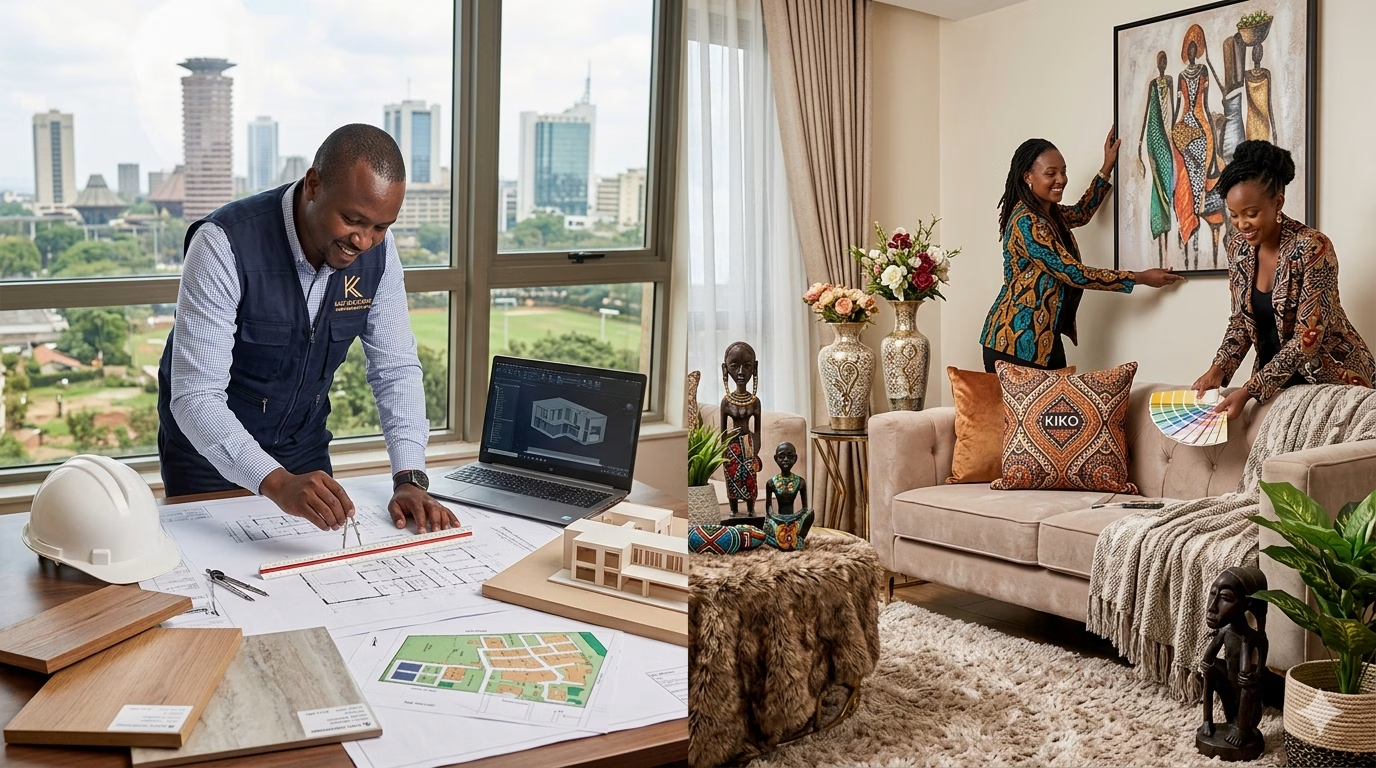
Something is shifting in how Nairobi’s homeowners think about their spaces. It is not just about having a beautiful home anymore, it is about having a home that reflects something specific: a design sensibility, a way of living, a considered point of view about what comfort actually means.
Walk through the newer residential developments in Rosslyn, the refurbished homes in Lavington, or the high-rise apartments redefining Kilimani’s skyline, and you will see it clearly. Kenya home décor has moved well beyond the predictable. Homeowners are making bolder choices, investing more deliberately, and working with designers who understand both global design currents and the very particular character of life in Nairobi.
At Saint Boss, we work with residential clients across the city every week. What follows is our honest read of the Nairobi interior design trends that are genuinely reshaping homes right now , not the trends that look good in a mood board, but the ones clients are actually living in and loving.
Biophilic Design: Bringing the Outdoors Inside
Of all the directions Nairobi interior design has moved in recent years, biophilic design has perhaps had the most lasting impact. The idea is straightforward, integrate natural materials, natural light, living plants, and organic forms into the interior environment, but when it is executed well, the effect on how a space feels is remarkable.
Nairobi is fortunate. The climate is generous, the light is extraordinary, and the surrounding landscape gives designers and homeowners rich visual material to draw from. Biophilic interiors in this city do not feel forced or fashionable. They feel like a natural extension of where we actually live.
What This Looks Like in Practice
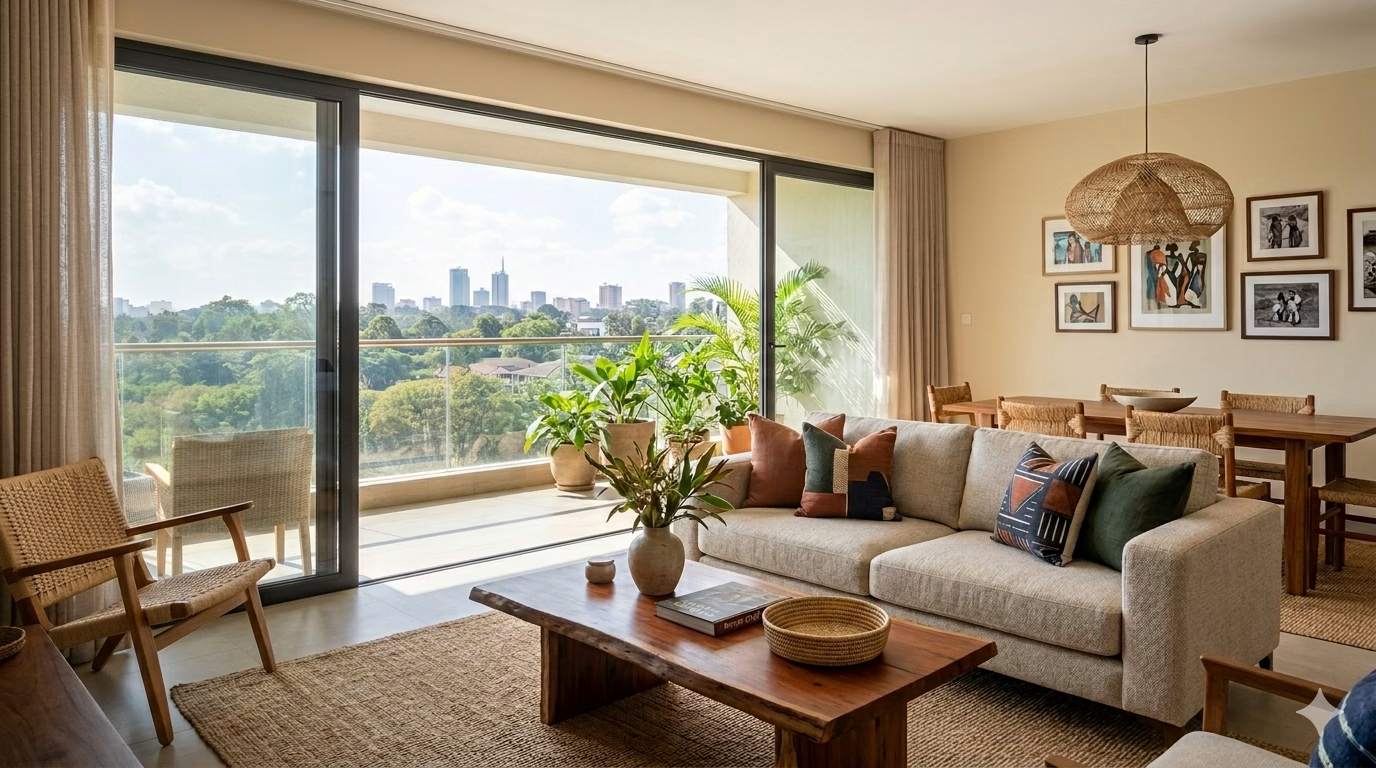
In practical terms, biophilic design in Nairobi homes means a few things. It means large windows and glass sliding doors that make the garden feel like part of the living room. It means stone surfaces , particularly Kenyan sandstone and local granite, used in kitchens, bathrooms, and feature walls. It means indoor planting that goes beyond a single potted succulent: vertical garden installations, statement indoor trees, and plant arrangements that are treated as seriously as any furniture piece.
It also means wood. Not the uniform, veneer-finish wood of a decade ago, but genuinely textured timber , with grain and warmth and character. Solid teak, reclaimed hardwood, and locally sourced timber species are all finding their place in Nairobi homes, paired with linen, jute, and handwoven textiles that reinforce the connection to natural material.
The result is interiors that feel grounded and calm , spaces that breathe rather than perform.
The Rise of Bespoke and Locally Made
For a long time, aspirational Kenya home décor was almost synonymous with imported furniture. European catalogues, South African suppliers, and container-shipped pieces were the markers of a well-designed home. That is changing, and the shift is one of the most interesting things happening in Nairobi interior design right now.
Why Bespoke Is Winning
A growing number of Nairobi’s most discerning homeowners are choosing bespoke , furniture and fittings designed and made specifically for their space ,over off-the-shelf imports. The reasons are practical as much as aesthetic. Bespoke pieces fit the exact dimensions of a room. They can be specified in materials that suit the climate. They do not arrive damaged after three months in a shipping container. And increasingly, the quality coming from Nairobi’s skilled craftspeople is genuinely competitive with anything from abroad.
There is also something more personal driving this trend. Clients want their homes to be distinctly theirs. A custom dining table, a handcrafted headboard, a built-in shelving system designed around an existing art collection,these are things that simply cannot be replicated from a catalogue.
At Saint Boss, our furniture supply and fit-out work increasingly involves working with trusted local makers to produce pieces that could not exist anywhere else. That specificity is what elevates a well-furnished room into a genuinely designed space.
Celebrating Kenyan Craftsmanship
Alongside bespoke furniture, there is a broader renewed appreciation for Kenyan craftsmanship in luxury interiors across Nairobi. Hand-thrown ceramics, woven baskets treated as art objects, locally produced textiles with traditional pattern references, and metalwork by Nairobi-based artisans are all finding their place in high-end residential interiors. This is not about decorating with “African accents” in a tokenistic way. It is about building spaces that are authentically rooted in where they exist.
Warm, Earthy Palettes Are Replacing Cool Minimalism
Not long ago, the default ambition for a well-designed Nairobi home was clean and white: white walls, pale grey furnishings, glossy surfaces, minimal clutter. It read as modern and sophisticated. It still can. But it has been quietly replaced, in the most interesting homes across the city, by something warmer and more complex.
The New Nairobi Colour Story
Terracotta, warm ochre, deep olive, burnt sienna, and rich chocolate brown are the tones appearing most consistently in the Nairobi interior design projects that genuinely excite us right now. These are not colours that shout. They are colours that settle into a room and make it feel inhabited , warm in the morning light, rich in the evening.
These palettes work particularly well in Nairobi’s residential context because they echo the landscape around the city: the red soil of the Central Highlands, the golden light of late afternoon, the deep greens of the long rains. They are not trends imported wholesale from European design weeks. They have a specific resonance here.
Paired with textured surfaces , limewash plaster walls, hand-laid tile, rough-hewn stone ,warm palettes create interiors that feel layered and intentional. The kind of spaces that look better after three years of living in them than they did on the day of handover.
Multifunctional Spaces and Thoughtful Space Planning
Nairobi’s homes are changing shape. The pandemic accelerated a shift that was already underway: homeowners increasingly need their residences to do more. A home office that actually functions as a professional environment. A living area that accommodates family movie nights but can also host a dinner party for twelve. A guest room that doubles as a study without feeling like either function has been compromised.
Space Planning as the Foundation of Good Design
This is where space planning becomes the most important conversation in any residential project , and where the difference between a good designer and a great one shows most clearly. It is relatively easy to make a large room with a generous budget look beautiful. The real skill is in understanding how a household actually lives: who comes home at what time, where the children do homework, how often guests stay over, where the morning chaos happens.
Good space planning in Nairobi homes accounts for all of this before a single piece of furniture is chosen. It asks harder questions than “what would look good here?” It asks what needs to work here, and for whom, at what time of day.
At Saint Boss, our residential design process always begins with a thorough brief , not just about aesthetics, but about how our clients live. The floor plan and the furniture choices follow from that understanding, not the other way around.
Integrating Storage Without Sacrificing Beauty
A closely related trend is the growing emphasis on integrated, considered storage in Kenya home décor. Built-in cabinetry that runs floor-to-ceiling, storage ottomans, bedside tables designed with intention, kitchens where every centimetre of wall space is thoughtfully used. The goal is spaces that remain beautiful when actually lived in ,not just on the day the photographer visits.
Lighting as a Design Element in Its Own Right
If there is one area where Nairobi homes have historically been underinvested, it is lighting. The instinct is often to treat lighting as a practical afterthought , enough lumens to see by, and perhaps a chandelier in the dining room. The most striking homes in the city today take a completely different approach.
Layers of Light
Contemporary residential lighting design works in layers. Ambient light provides the overall illumination of a room. Task lighting serves specific functions , reading, cooking, working. Accent lighting draws the eye to artwork, architectural details, or particular features. And decorative lighting , a sculptural floor lamp, a cluster of handblown pendants, a backlit shelving installation , functions as an object of interest in its own right.
When these layers work together, lighting becomes one of the most powerful tools for creating atmosphere in a home. The same room can feel open and energetic at noon and intimate and warm at eight in the evening, simply through the way lighting has been designed and controlled.
This trend toward layered, intentional lighting is one of the quiet revolutions in Nairobi interior design and one that makes a more visible difference to how a space feels than almost any other single investment.
Why Saint Boss?
At Saint Boss, we have watched these trends emerge not in design publications, but in the homes we are actually building for clients across Nairobi. We understand that a trend is only useful if it serves the specific life happening inside a specific house , and that the best residential interiors are the ones that reflect the people who live in them, not the year they were completed.
Our approach to residential work in Kenya combines a rigorous design process with full furniture supply and fit-out delivery. We source the right materials , whether that means commissioning a bespoke piece from a local maker or procuring a specific imported item ,and we manage the entire process so that what you see in the design renders is what you live in when the project is complete.
If you are thinking about transforming your home, whether that is a full renovation or a considered refresh of the spaces that matter most, we would love to talk. Visit www.saintboss.com to start the conversation.